The Digital Ghost Con
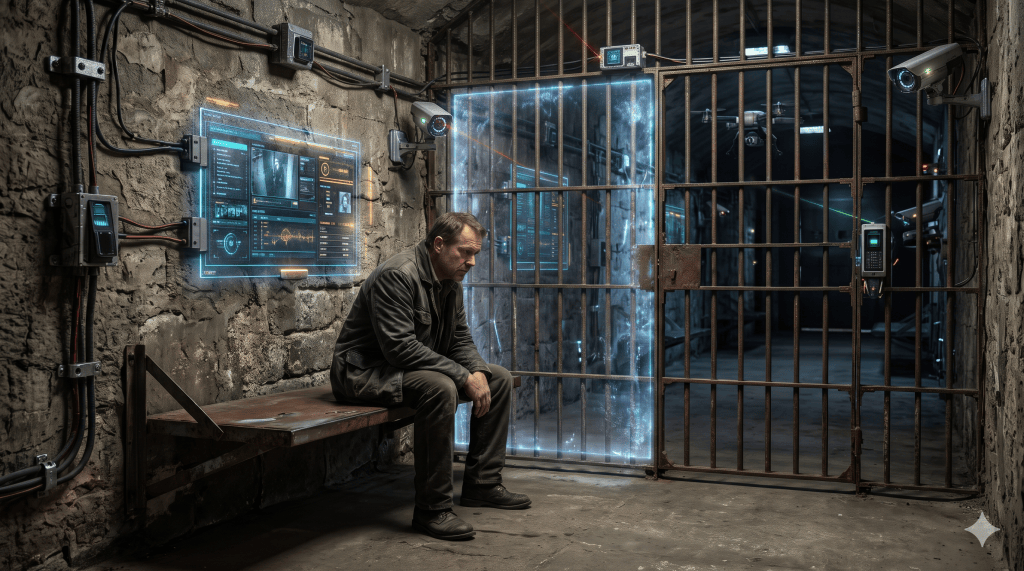
The concrete under Bob’s cot gave off the flat, unyielding chill of a tomb. Overhead, an institutional fluorescent tube flickered with a greasy buzz, carving ugly, rhythmic bars across the gray floor.
Bob leaned forward, elbows planted on his denim knees, his palms pressed into his temples until his eyes threw sparks against the dark. He kept retracing the blueprint of his life, searching for the fissure where the ground had vanished beneath his boots.
He was a nobody. A shut-in. A guy whose greatest daily triumph was getting his aging parents’ prescriptions lined up in the right little plastic boxes and keeping the lawn trimmed so the neighbors wouldn’t mutter. That was the whole ledger. No debts, no grudges, no dark corners.
Then the door had been kicked in.
The feds had laid it out on the stainless-steel table like a deck of marked cards. Bank accounts in Zurich and Macau under his social security number, loaded with dirty blood money from Chinese triads and Russian muscle. Encrypted chats on dead forums where a man wearing his name bargained for women, narcotics, and firearms. Neighbors swearing on stacks of Bibles that he’d hissed threats at them over the garden fence. A paper trail so vicious, so pristine, that even he had stared at his own signatures and wondered if some black, rotting twin had crawled out of his mirror while he slept.
He’d sworn he was innocent until his throat bled. The interrogators had just smiled that dry, tired smile men wear when they think they’ve caught a snake by the tail.
Then came the mess hall twenty minutes ago.
The gray-haired guard—Miller, a lifer with rheumy eyes and knuckles scarred from thirty years of breaking up scuffles—had stepped into Bob’s blind spot while scraping trays. He hadn’t looked at Bob. He’d just leaned an inch, his voice scraping out low beneath the clatter of tin spoons.
“Don’t bother crying to the public defender, son,” Miller had murmured, his jaw hardly moving. “You’re a digital ghost con. A blank slate they hung their bad laundry on. I seen it twice before down in D.C. Somebody stripped your gear, took your shape, and sold your skin to the wolves.”
“Who?” Bob had managed, his chest hitching.
“Doesn’t matter who,” the old man had replied, cold and flat. “The paper says it’s you. The machines say it’s you. And in this town, the machines are God. There isn’t a damn thing I can do, and there isn’t a damn thing you can do. You’re holding the bill. Get used to the view.”
Now, alone in the cage, the phrase rattled through Bob’s skull like a loose slug in an empty cylinder. A digital ghost.
He looked down at his calloused fingers. If someone could steal your bank logs, splice your messages, fabricate your vices, and broadcast your rot to the world while you sat at the kitchen table brewing chamomile tea for your mother—then what was a man? A body was just meat sitting on a bunk. The world outside didn’t care about blood and bone anymore; it answered to the ledger, the trail of electric breadcrumbs scattered across servers he’d never see.
He knew he hadn’t touched a cent. He knew he’d never spoken a word of malice to the people across the street. But out there, Bob the criminal existed, complete and documented down to the microsecond. That other Bob was guilty as sin, and this Bob was going to rot for him.
A lone draft curled through the bars, carrying the smell of damp lime, sour bleach, and stale despair. Somewhere down the tier, a pipe hissed like escaping steam. Bob leaned back against the iron wall, listening to the hum of the light, waiting for the silence to tell him where a phantom went when the trap was already sprung.


Leave a Reply